KnoWhy #877 | November 18, 2026
Why Was Obadiah So Upset with the Edomites?
Post contributed by
Scripture Central
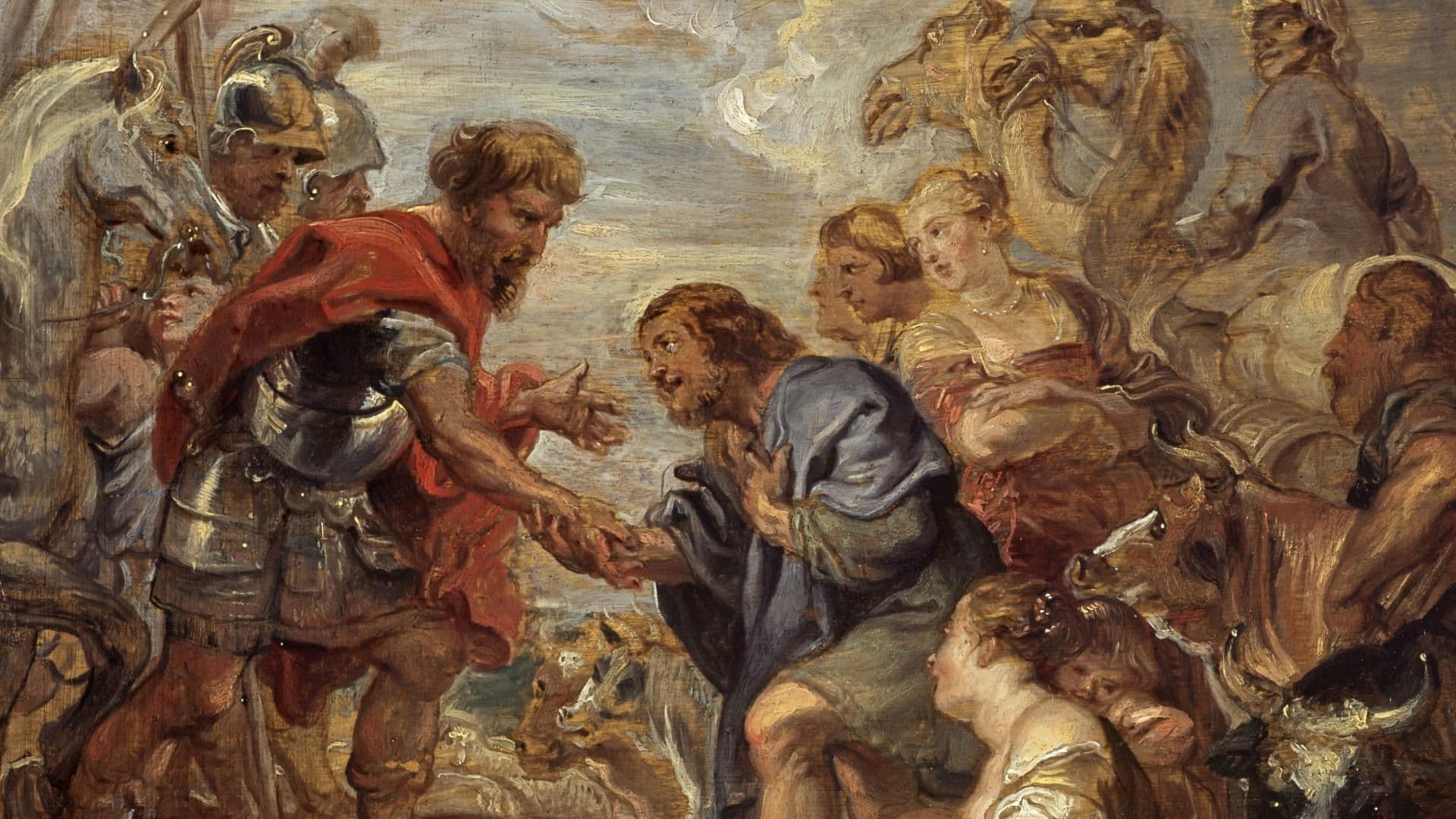
For thy violence against thy brother Jacob shame shall cover thee, and thou shalt be cut off for ever. Obadiah 1:10
The Know
Most of the Book of Obadiah concerns Obadiah’s opposition to Judah’s neighbors, the Edomites, because they helped the Babylonians sack Jerusalem (see Psalm 137:7). But why would Obadiah direct his ire against the Edomites rather than the Babylonians who caused most of the destruction? The Book of Genesis demonstrates that the Edomites were seen as distant “brothers” of the Israelites, perhaps making their betrayal feel more painful for the Judahites.1
In Genesis 25, Rebekah was pregnant with her twin sons Jacob and Esau, and she felt as though they were struggling in the womb and asked the Lord why this was the case (Genesis 25:22). He explained, “Two nations are in your womb, and two peoples who come from your womb will be divided, and one will be stronger than the other, and the older will serve the younger” (Genesis 25:23). Jacob eventually became the ancestor of the Israelites, and Esau became the ancestor of Israel’s neighbors to the south-east, the Edomites (Genesis 36:1).2 The in-utero conflict between these individuals foreshadows the real conflicts between them and their descendants later in life. In Genesis 27:40, Isaac tells Esau, “you will live by your sword and will serve your brother. And it will come to pass when you bring him down, that you will break his yoke from off your neck.”3 This comment from Isaac reflects the eventual reality of the relationship between the Israelites and the Edomites.4 King David eventually conquered the Edomites and brought them under Israelite control (2 Samuel 8:14). Thus, the Edomites served their “brother” the Israelites for a time, fulfilling both God’s words to Rebekah and Isaac’s words to Esau. However, the Edomites eventually rebelled against the Israelites and gained their freedom (2 Kings 8:20-22).
Even comments that might seem like unrelated remarks sometimes point to their descendants. For example, Genesis 25:25 states that when Esau was born, he “came out red, with his whole body like a hairy cloak, and they named him Esau.” The Hebrew word for red sounds almost exactly like the word Edom, the name of the nation Esau would eventually sire. In addition, the Hebrew word for hairy sounds almost exactly like the word Seir, which is the area where the Edomites lived (Genesis 36:8).5
The genealogies preserved in the texts help readers understand the relationship between their people and the peoples surrounding them.6 The Israelites would know through these genealogies that they are indirectly related to the Ammonites and Moabites through Lot, Abraham’s nephew. They would know that they are more closely connected to the Ishmaelites through Ishmael, Abraham’s son, and that they were even more closely related to the Edomites through Esau, Isaac’s son.7
Some scholars have proposed that these individuals and their immediate family dynamics were just a reflection or personification of later nations and their relationships with one another. Of course, this can easily lead to the conclusion that the individuals in scriptural stories were not real human beings. However, this is almost certainly untrue. Why, for example, would the Bible include such things as the reconciliation of Jacob and Esau as depicted in Genesis 33, rather than leaving them at odds, as was the historical reality of their descendants?8 It is more likely that the stories were real stories about real people, but the stories could still be shaped to reflect realities in later years. This possibility becomes even more likely when one considers that there are concrete examples of this kind of thing happening even in modern times.
Shortly after the British invasion of Africa, British officials recorded the genealogies of the Gonja people in Ghana. They were said to have been descended from seven sons from one family, with each son forming one clan. Then, sixty years later, these genealogies were recorded again. The second time the genealogies were written down, two of the sons were no longer included. The reason for this was simple: political arrangements had changed such that there were now only five clans. The two other sons had simply dropped out as political arrangements changed.9 The people in the genealogy were real people, recorded in reliable historical records, but the material relevant to the present had been included, and the irrelevant material had dropped out.
Never miss a KnoWhy
Get Scripture Central's latest research and resources delivered straight to your inbox.
The Why
Knowing these details about the characters in Genesis changes how one sees Obadiah. In addition to reflecting the complex lives of real people in ancient times, the stories in Genesis also reflect the complex relationships between the peoples of ancient Israel with their neighbors. This makes the Edomites’ involvement in the sacking of Jerusalem even more disturbing. The Edomites were kin. This explains the raw pain of the Book of Obadiah towards the Edomites, as the sense of betrayal would surely have run deeper.
However, the story of Jacob and Esau in Genesis suggests the possibility of reconciliation between the Edomites and the Israelites, despite what they have been through. In Genesis 33, when Jacob meets Esau after years of estrangement, “Esau ran to meet him, and embraced him, and fell on his neck, and kissed him: and they wept” (v.4). Jacob, in turn, gives him a gift and urges him “I pray thee, if now I have found grace in thy sight, then receive my present at my hand: for therefore I have seen thy face, as though I had seen the face of God, and thou wast pleased with me” (v.10).
Reconciliation is possible, even among groups that may seem radically different, despite terrible mistakes on either side. Christ’s atonement allows terrible wounds to heal and helps people find real forgiveness, regardless of what has transpired between groups of people. That was true in ancient times and remains true today.
The Church of Jesus Christ of Latter-day Saints, "Introduction to Obadiah," In Old Testament Study Guide for Home-Study Seminary Students (Salt Lake City: The Church of Jesus Christ of Latter-day Saints), 2015. https://www.churchofjesuschrist.org/study/manual/old-testament-study-guide-for-home-study-seminary-students-2015/introduction-to-obadiah?lang=eng.
Dana M. Pike, “Obadiah 1:21: Context, Text, Interpretation, and Application,” in Prophets and Prophecies of the Old Testament, ed. Aaron P. Schade, Brian M. Hauglid, and Kerry Muhlestein (Provo, UT: Religious Studies Center; Salt Lake City: Deseret Book, 2017),47-78.
- 1. For a classic treatment, see Bartlett, J. R. “The Land of Seir and the Brotherhood of Edom,” The Journal of Theological Studies 20, no. 1 (1969): 1–20.
- 2. Barnes, Ian, and Josephine Bacon. 2009. The Historical Atlas of Judaism. Updated ed. Edision, N.J.: Chartwell Books, Inc., 41.
- 3. The Hebrew here is slightly unclear, the LXX reading of “bring him down” likely reflects the general sense of the Hebrew.
- 4. See, for example, Numbers 20:14-21, when the Edomites refuse the Israelites passage through their territory, and 1 Sam 14:47, when Saul fights against the Edomites.
- 5. The deeper connection between the forefathers of a nation and their descendants can be seen in other parts of Genesis as well. In Genesis 19, Lot’s daughters get their father drunk and have intercourse with him on two consecutive nights, with both becoming pregnant by their father. They give birth to the Moab, the ancestor of the Moabites, and to Ben-ammi, the ancestor of the Ammonites. This story likely does more than simply give the origins of these peoples, it also insults them. The name Moab sounds like the Hebrew term for “from father” and Ben Ammi is Hebrew for “my father’s son.” Sarna, Nahum M. Genesis : The Traditional Hebrew Text with New JPS Translation. 1st ed. Philadelphia: Jewish Publication Society, 1989, 140.
- 6. For an overview of these issues, see Andriolo, Karin R. “A Structural Analysis of Genealogy and Worldview in the Old Testament.” American Anthropologist 75, no. 5 (1973): 1657–69.
- 7. For more on this, see Sarna, Nahum M. Genesis : The Traditional Hebrew Text with New JPS Translation. 1st ed. Philadelphia: Jewish Publication Society, 1989, 175.
- 8. Sarna, Nahum M. Genesis : The Traditional Hebrew Text with New JPS Translation. 1st ed. Philadelphia: Jewish Publication Society, 1989, 140.
- 9. Goody, Jack, and Ian Watt. “The Consequences of Literacy.” Comparative Studies in Society and History 5, no. 3 (1963), 310.