KnoWhy #871 | September 22, 2026
Why Does Isaiah Use Language Similar to That of an Ancient Persian Prophet?
Post contributed by
Scripture Central
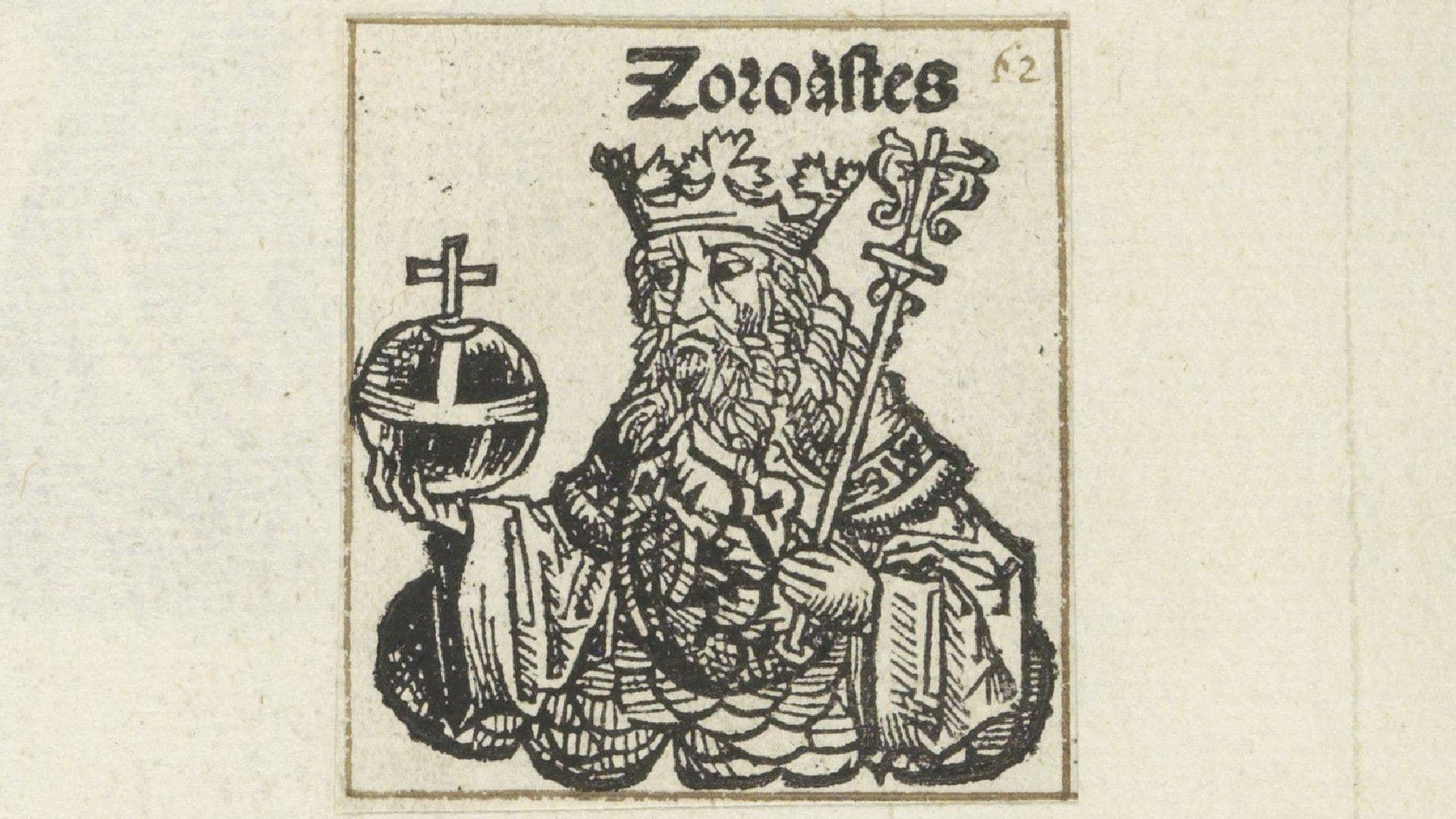
“I form the light, and create darkness: I make peace, and create evil: I the Lord do all these things.” Isaiah 45:7
The Know
Isaiah 45:5-7 is an interesting passage about the cosmic power of God: “I am the Lord, and there is none else, there is no God beside me: I girded thee, though thou hast not known me: That they may know from the rising of the sun, and from the west, that there is none beside me. I am the Lord, and there is none else. I form the light, and create darkness.” This passage is significant not only because of what it teaches about the Lord, but also because some of the wording is similar to an ancient Iranian prophet who lived a couple hundred years before Isaiah.
Sometime before 1,000 BC, a man from Central Asia named Zarathustra began to speak out against problems he saw in the world around him.1 He thought that people were not worshipping God the way they should and proposed a much simpler system than what people were doing at the time. Rather than worshipping many Gods, Zarathustra proposed that people should worship the good god, Ahura Mazda, and shun the evil being, Angra Mainyu.2 His beliefs and teachings became the basis for Zoroastrianism, a religion that still exists today.
Zarathustra created a short body of hymns or poetry called the Gathas that are a core part of Zorastrian scripture (called the Avesta).3 Scholars have noted that Isaiah has language that is similar to passages in the Gathas. Yasna 44 in the Gathas is famous for its unique poetic structure: Zarathustra asks Ahura Mazda a long series of cosmic rhetorical questions about creation where the implied answer is "You did." Isaiah uses this highly distinct style in his record. For example, Yasna 44:5 reads, “I inquire of you this, tell me sincerely, Lord: what skilled worker made the light and the darkness?”4 Isaiah 45:7 gives the answer to this query, “I form the light, and create darkness … I the Lord do all these things.”5 While some scholars assume Isaiah is aware of and quotes or responds to Zarathustra’s work, other biblical scholars maintain that Isaiah's language is simply a natural extension of much older Near Eastern traditions (like the Genesis creation accounts or Babylonian motifs) and that any similarities to the Gathas are parallel developments rather than direct copying.6 However, if Isaiah is alluding to the words of an Iranian prophet, it is likely due to the fact that they share a common belief that all things across the world are made by God.
Never miss a KnoWhy
Get Scripture Central's latest research and resources delivered straight to your inbox.
The Why
One might not initially assume that a prophet like Isaiah would quote something from a prophet of another religion in another part of the world. However, this teaches an important point about how God interacts with his children. The Lord says through Isaiah, “I am the Lord, and there is none else, there is no God beside me: I girded thee, though thou hast not known me: That they may know from the rising of the sun, and from the west, that there is none beside me. I am the Lord, and there is none else” (Isaiah 45:5–6). Through Isaiah, the Lord teaches all people that He is indeed the only God. If people around the world have insights about the divine, it is because He has taught them these things and helped them teach his words to others.
This reminds all readers of the Bible that people across the world can receive inspiration from God and teach it to others. Rather than being nervous about texts written by people from other religious traditions, one can find truth in texts from people from all places, times, and denominations. The First Presidency has stated, “The great religious leaders of the world such as Mohammed, Confucius, and the Reformers, as well as philosophers including Socrates, Plato, and others, received a portion of God’s light. Moral truths were given to them by God to enlighten whole nations and to bring a higher level of understanding to individuals.” They continued, “Consistent with these truths, we believe that God has given and will give to all peoples sufficient knowledge to help them on their way to eternal salvation, either in this life or in the life to come.”7
Roger R. Keller, Light and Truth: A Latter-day Saint Guide to World Religions (BYU Religious Study Center, 2012), 188-205.
- 1. Frantz Grenet, “Zarathustra’s Time and Homeland Geographical Perspectives,” in The Wiley Blackwell Companion to Zoroastrianism, ed. Michael Stausberg and Yuhan Sohrab-Dinshaw Vevaina (West Sussex: Wiley & Sons, 2015), 21–29; as well as Almut Hintze, “Zarathustra’s Time and Homeland Linguistic Perspectives,” in The Wiley Blackwell Companion to Zoroastrianism, ed. Michael Stausberg and Yuhan Sohrab-Dinshaw Vevaina (West Sussex: Wiley & Sons, 2015), 31–38. See also Frantz Grenet, “An Archaeologist’s Approach to Avestan Geography,” in Birth of the Persian Empire, ed. Vesta Sarkhosh Curtis and Sarah Rosemary Anne Stewart, Ideas of Iran 1 (London: I. B. Tauris, 2005), 44–45.
- 2. J. Duchesne-Guillemin, “Ahriman,” Encyclopædia Iranica, 2011, http://www.iranicaonline.org/articles/ahriman.
- 3. For more on this, see Prods Oktor Skjærvø, “Zarathustra: First Poet-Sacrificer,” in Paitimāna. Essays in Iranian, Indian, and Indo-European Studies in Honor of Hanns-Peter Schmidt, ed. Siamak Adhami, 2 vols. (Costa Mesa, CA: Mazda Publishers, 2003), 157–94. See also Prods Oktor Skjærvø, “The State of Old Avestan Scholarship,” JAOS 117.1 (1997): 103–14.
- 4. Gathas translated from the Old Avestan by Scripture Central staff.
- 5. This was noticed many years ago. See James Hope Moulton, Early Zoroastrianism: Lectures Delivered at Oxford and in London (London: Constable and Company LTD, 1926).
- 6. See Tina Dykesteen Nilsen, “Creation in Collision? Isaiah 40–48 and Zoroastrianism, Babylonian Religion and Genesis 1.” Journal of Hebrew Scriptures, 2013.
- 7. “God’s Love for All Mankind,” First Presidency Statement, 15 February 1978.