KnoWhy #854 | May 26, 2026
Why Does Boaz Allude to a Well in Connection with His Meeting Ruth?
Post contributed by
Scripture Central
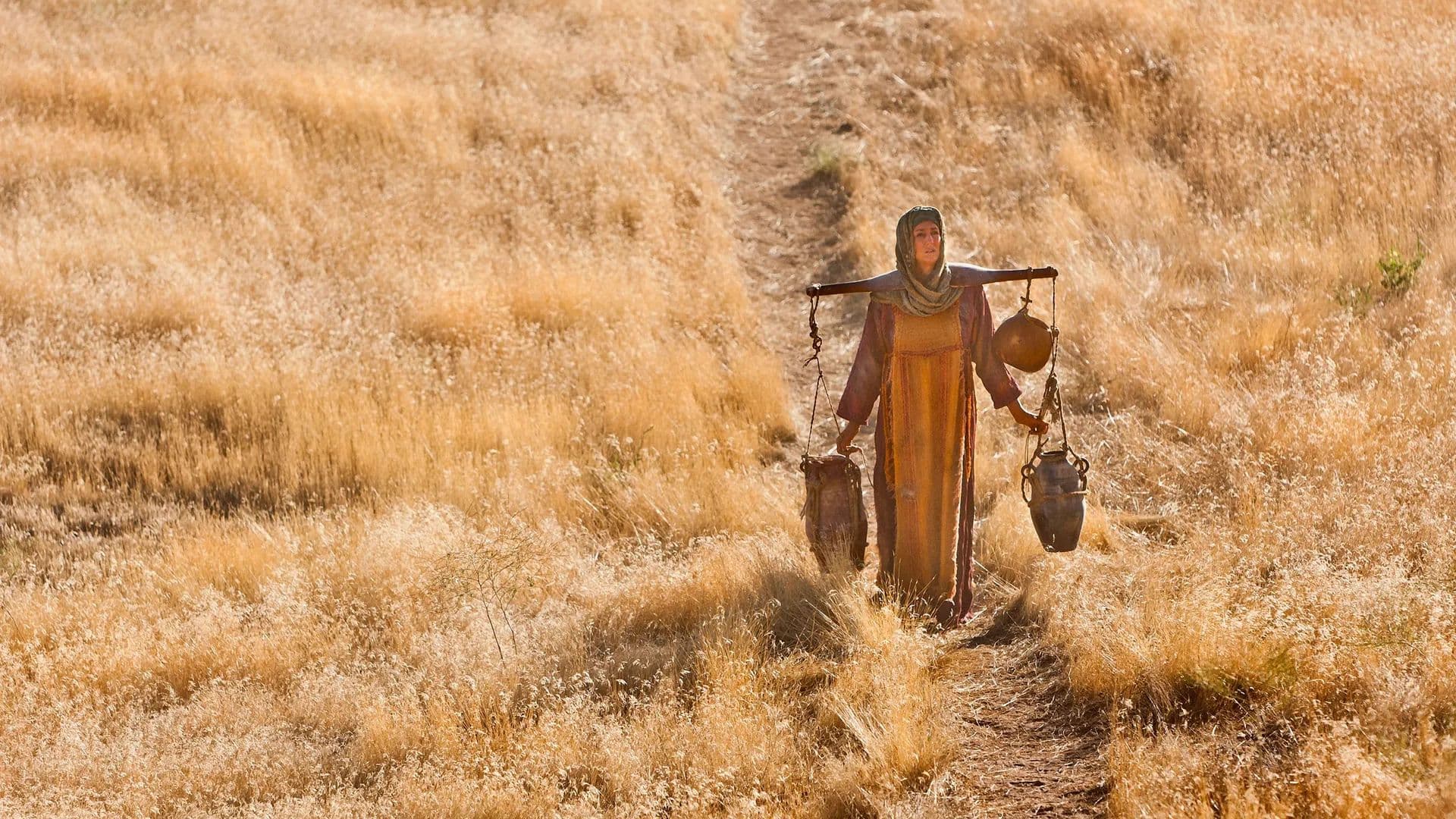
“And when thou are athirst, go unto the vessels, and drink of that which the young men have drawn.” Ruth 2:9
The Know
As one reads the Book of Ruth, some elements may seem vaguely familiar, yet somehow different. Ruth leaves her home in Moab and travels to Israel where she meets Boaz, who will soon become her husband. A well is alluded to when they meet (Ruth 2:9). One sees similar elements in earlier parts of the Old Testament. In Genesis 24, Abraham’s servant leaves their home and goes to another land and meets Rebekah, Isaac’s future wife, at a well. In Genesis 29, Jacob travels away from his current home and meets his wife Rachel at a well. In Exodus 2, Moses leaves Egypt and meets his wife at a well. In all these cases, the stories are similar to what one finds in Ruth, yet contain slight differences. For example, it is usually men who are the travelers coming from Israel, whereas Ruth is a woman traveling to Israel. Nevertheless, the similarities of Ruth to these other stories likely exist because the author is utilizing an ancient pattern of storytelling, called a “type-scene“ by modern scholars.
Type-scenes are a narrative style in which certain stories are modeled after a basic outline, with the specifics being changed depending on the individual story being told. In the case of the stories mentioned above, those hearing them in the past would know that when a man went to another country, met a woman at a well, and obtained water from said well, that it was likely going to become a betrothal scene of some sort.1 In these stories, the woman would often run home to tell her family, and arrangements would be made between the man and the family for marriage.2
But the ancient audience knew that they should listen for something else in these stories. Each version had differences, and these differences allowed the type-scene to fit each character’s historical circumstance and, perhaps more importantly, provide the audience with some deeper meaning.3
Biblical scholar Robert Alter has noted that in Isaac’s story, for example, the woman is the one who draws the water from the well, not the man.4 This foreshadows what will happen later in the narrative when Rebekah takes the initiative to ensure that her chosen son Jacob receives Isaac’s blessing rather than Esau.5 As Alter states, “Rebekah is to become the shrewdest and the most potent of the matriarchs, and so it is entirely appropriate that she should dominate her betrothal scene.”6 The differences in the well-scene foreshadowed differences later in the narrative.7
Another good example of this can be seen in the Moses story. Moses has to help the women at the well deal with interlopers before he can draw water for his future wife (Exodus 2:15-17). This foreshadows what Moses will have to do later on in the narrative. He will have to help deliver his people from oppressors in Egypt, just as he delivered the women from the rascals at the well.8 Jacob, similarly, has to move the stone from the mouth of the well before he is able to get water for the flocks of his future wife, Rachel (Genesis 29:10). The effort Jacob has to put in to move the stone out of the way before being able to water Rachel’s flocks is fitting in light of the effort Jacob is going to have to make before he is able to marry Rachel: seven years of work (Genesis 29:20).9
Because it is assumed that the audience would know the type-scenes and come to expect it in certain situations, biblical authors could work with the audience’s expectations for the scene, modifying it in unique ways. For example, in 1 Samuel 9, Saul goes far from home searching for his father’s lost animals. In verse 11, he meets maidens going out to draw water from a well. The audience likely would have expected a well type-scene to ensue. However, nothing happens. Saul asks the women for information and continues on his way (v. 11-14). This foreshadows what will eventually happen to Saul, whose reign will be cut short, just like his betrothal type-scene was not fulfilled.10
Even the New Testament has a woman-at-the-well type-scene. In John 4:3-7, Jesus travels to Samaria and meets a woman at a well. However, things do not go as expected. Marriage is discussed, but it is the women’s marriage to other men (or the lack of marriage to her current boyfriend) that becomes central to the moment (John 4:17-18). Similar to other type-scenes, she goes into town and tells the people about what has happened, but to testify of Him, rather than be married to Him (John 4:28-29). This scene emphasizes the new kind of covenant relationship that Jesus is going to have with all people, not just with one woman.11
The Why
In Ruth, much is reversed from the earlier examples, as noted above. In Ruth 2:9, Boaz tells Ruth that the young men will draw water from the well for her, a reversal of some of the scenes in which the young women draw water. In case the reader missed the reference to the patriarchs, Ruth 2:11 is a clear allusion to Genesis 12:1, in which Abraham is told to leave for a new land: “Thou hast left thy father and thy mother, and the land of thy nativity, and art come unto a people which thou knewest not heretofore” (Ruth 2:11). Ruth therefore becomes like the patriarchs who left everything to follow God. After the conversation, Boaz invited Ruth to eat a meal with him, reminiscent of the feast at the end of similar type-scenes.12
In addition, understanding the type-scene teaches the reader something about God. In the Book of Ruth, Ruth the Moabite, a member of a group with whom the Israelites were historically at odds, is compared favorably with the patriarchs. In a world that was often hostile to outsiders, this text is a refreshing reminder that God is willing to accept anyone who comes to Him and keeps the commandments, no matter his or her ethnicity or cultural background. The fact that the destination is reversed and Ruth, a gentile woman, comes to Israel for her betrothal can also be a metaphor for the blessings awaiting all who are adopted into the house of Israel as Israel returns home from their scattering during the famine (see Ruth 1:1-2).
In a world that can be polarizing and hostile towards people who may be different, the Book of Ruth reminds us that God loves the gentiles as much as He loves the Israelites, and teaches all who read this book to extend the same love to all people around them.
Sherrie Mills Johnson, “Old Testament Minute: Ruth,” Old Testament Minute, Vol. 8, ed. Taylor Halverson (Book of Mormon Central, 2022).
Scripture Central, “How Does the Book of Mormon Use an Ancient Storytelling Technique? (Alma 17:24-25),” KnoWhy 414 (August 20, 2020).
Alan Goff, “Reduction and Enlargement: Harold Bloom’s Mormons,” Review of Books on the Book of Mormon 5, no. 1 (1993): 105–108.
- 1. Robert Alter, The Art of Biblical Narrative, 2nd ed. (Basic Books, 2011), 62.
- 2. Alter, The Art of Biblical Narrative, 62.
- 3. Alter, The Art of Biblical Narrative, 63.
- 4. Alter, The Art of Biblical Narrative, 64.
- 5. Alter, The Art of Biblical Narrative, 64.
- 6. Alter, The Art of Biblical Narrative, 64.
- 7. For one example of this, see Alter, The Art of Biblical Narrative, 70.
- 8. Robert Alter, “Biblical Type-Scenes and the Uses of Convention,” Critical Inquiry 5, no. 2 (1978): 364-365.
- 9. Alter, “Biblical Type-Scenes," 362.
- 10. Alter, “Biblical Type-Scenes,“ 366-367.
- 11. For an in-depth investigation, see Andrew E. Arterbury, “Breaking the Betrothal Bonds: Hospitality in John 4,” The Catholic Biblical Quarterly 72, no. 1 (2010): 63–83.
- 12. Alter, The Art of Biblical Narrative, 58-59.