Evidence #549 | June 18, 2026
Book of Moses Evidence: Eyes, Ears, and Hearts
Post contributed by
Scripture Central
Abstract
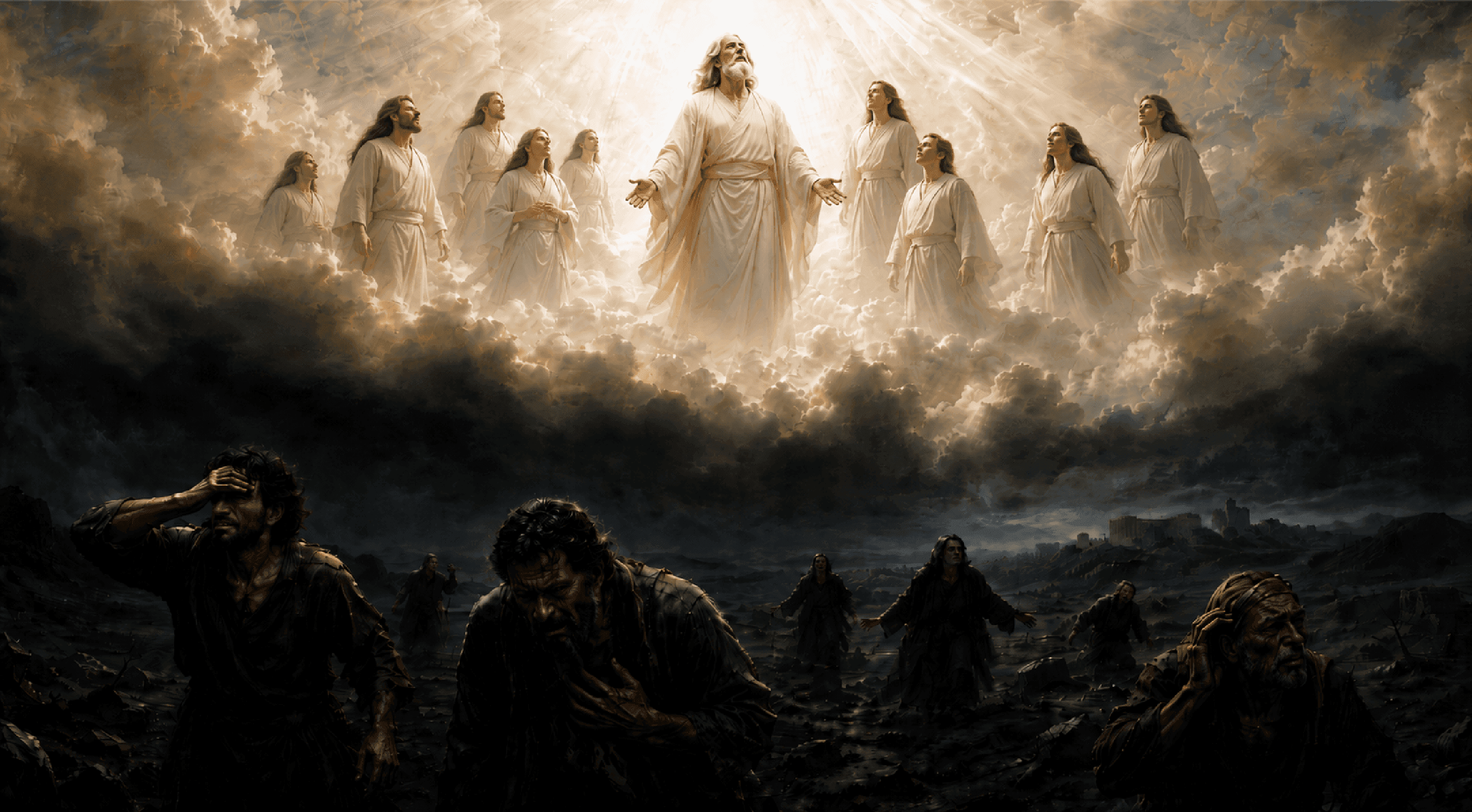
The discussion of eyes, ears, and hearts in Moses 6:27 subtly aligns with ancient Enochic traditions.In the introduction to Enoch’s prophetic calling in Moses 6, the Lord explained why Enoch was being sent to preach repentance unto the people: “for thus saith the Lord: I am angry with this people, and my fierce anger is kindled against them; for their hearts have waxed hard, and their ears are dull of hearing, and their eyes cannot see afar off” (Moses 6:27).1
At first glance, one might assume Joseph Smith was simply using imagery found in several locations in the Bible. The most famous iteration arises in Isaiah 6:9–10: “Go, and tell this people, Hear ye indeed, but understand not; and see ye indeed, but perceive not. Make the heart of this people fat, and make their ears heavy, and shut their eyes; lest they see with their eyes, and hear with their ears, and understand with their heart, and convert, and be healed.” This passage is particularly well known because it is quoted in Matthew 13:14–15 and also in Acts 28:26–27. A related instance of this imagery arises in Deuteronomy 29:4: “Yet the Lord hath not given you an heart to perceive, and eyes to see, and ears to hear, unto this day.”
These same three bodily organs are mentioned, although in a positive context, in a vision recorded in the book of Ezekiel, in which an angelic being told him the following: “Son of man, behold with thine eyes, and hear with thine ears, and set thine heart upon all that I shall shew thee” (Ezekiel 40:4). Similar language is also found in 1 Corinthians 2:9: “Eye hath not seen, nor ear heard, neither have entered into the heart of man, the things which God hath prepared for them that love him.”
Although these sources mention the eyes-ears-heart imagery, none of them has an apparent antediluvian context. One notable exception, however, arises in Ben Sira (also known as Ecclesiasticus), an apocryphal text that was present in many Bibles of the early 19th-century, including the one that Joseph Smith purchased in the fall of 1829.2 Concerning God’s creation of mankind, it declares, “Counsel, and a tongue, and eyes, ears, and a heart, gave he them to understand. Withal he filled them with the knowledge of understanding, and shewed them good and evil.”3
The Eyes-Ears-Heart Triad in Extrabiblical Sources
As can be seen, this eyes-ears-heart imagery was present in biblical passages that Joseph Smith would likely have encountered in his early 19th-century environment. In its most famous instances, however, this motif cannot be clearly tied to an antediluvian setting, as seen in Moses 6:27.4 Even more important is that none of these texts have anything to do with the prophet Enoch. It is therefore quite notable that the same three-fold imagery is mentioned by Enoch himself in 2 Enoch 65:2: “Listen, my children! … Understand how … [the Lord] constituted man in his own form, in accordance with a similarity. And he gave him eyes to see, and ears to hear, and heart to think, and reason to argue.”5
Admittedly, the imagery in 2 Enoch 65:2 is positive (describing the eyes, ears, and heart as faculties graciously given to humanity by God) whereas Moses 6:27 uses the same triad negatively (describing a people whose hearts have hardened, whose ears have grown dull, and whose eyes can no longer see afar off). Yet this contrast does not detract from the proposed connection. If eyes, ears, and heart were understood as divine endowments of physical perception and spiritual discernment, then Moses 6:27 presents the wicked in Enoch’s day as having corrupted or forfeited those precious primordial gifts. As explained by Jeffrey Bradshaw,
The references to ears that do not hear and eyes that do not see may allude to blessings associated with different parts of the body received in ancient Jewish and Christian washing and anointing ceremonies. These words affirm that these promised blessings are denied to individuals who have broken their covenants. By way of contrast to the spiritually blind and deaf, Enoch will be made to see.6
Building on Bradshaw’s final point, we read in Moses 6:36 that Enoch, after anointing his eyes with clay and washing them, was able to behold “things which were not visible to the natural eye; and from thenceforth came the saying abroad in the land: A seer hath the Lord raised up unto his people.”7 When viewed in this light, the condemnation of the people’s eyes, ears, and hearts in Moses 6:27 seems textually sophisticated, as it sets up a powerful literary foil with Enoch himself.
Interestingly, an Islamic source known as Nihāyat al-arab fī akhbār al-Furs wa’l-ʿArab specifically mentions the triad of discernment in connection to Enoch’s heavenly ascent. It describes how Idris (the name for Enoch in Islamic sources) had been granted permission from the Lord to enter and view paradise: “So the gate was opened, and Idris (upon whom be peace!) entered through it. He viewed what (previously) no eye had ever seen, (heard) what (previously) no ear had ever heard, and (conceived) what (previously) no human heart had ever thought of.”8
A further point of comparison comes from the Dead Sea Scrolls. In a text commonly known as the Community Rules, the condition of mankind is framed as a contest between two opposing spirits: one associated with truth and righteousness and the other with falsehood and wickedness. Although the discussion in this source is not specifically connected to Enoch, it provides an illuminating parallel to Moses 6–7, where the eyes-ears-heart triad appears alongside a cluster of other parallel elements. As shown in the following chart, these include righteous and wicked “ways,” divine anger, corrupt counsel, darkness, abominations, hell, and fallen angels:9
Moses 6–7 | Community Rules |
6:21 … And Jared taught Enoch in all the ways of God. 6:23 And they were preachers of righteousness, and spake and prophesied, and called upon all men, everywhere, to repent; and faith was taught unto the children of men. 6:27 And he heard a voice from heaven, saying: Enoch, my son, prophesy unto this people, and say unto them—Repent, for thus saith the Lord: I am angry with this people, and my fierce anger is kindled against them; for their hearts have waxed hard, and their ears are dull of hearing, and their eyes cannot see afar off; 6:28 And for these many generations, ever since the day that I created them, have they gone astray, and have denied me, and have sought their own counsels in the dark; and in their own abominations have they devised murder, and have not kept the commandments, which I gave unto their father, Adam. 6:29 Wherefore, they have foresworn themselves, and, by their oaths, they have brought upon themselves death; and a hell I have prepared for them, if they repent not; 7:1 … and many have believed not, and have perished in their sins, and are looking forth with fear, in torment, for the fiery indignation of the wrath of God to be poured out upon them. 7:26 And he beheld Satan; and he had a great chain in his hand, and it veiled the whole face of the earth with darkness; and he looked up and laughed, and his angels rejoiced. | God’s love for one spirit lasts forever. He will be pleased with its actions for always. The counsel of the other, however, He abhors. … Upon earth their operations are these: one enlightens a man’s mind, making straight before him the paths of true righteousness and causing his heart to fear the laws of God. … The operations of the spirit of falsehood result in greed, neglect of righteous deeds, wickedness, lying, pride and haughtiness, cruel deceit and fraud, massive hypocrisy, a want of self-control and abundant foolishness, a zeal for arrogance, abominable deeds fashioned by whorish desire, lechery in its filthy manifestation, a reviling tongue, blind eyes, deaf ears, stiff neck and hard heart—to the end of walking in all the ways of darkness and evil cunning. The judgement of all who walk in such ways will be multiple afflictions at the hand of all the angels of perdition, everlasting damnation in the wrath of God’s furious vengeance, never-ending terror and reproach for all eternity, with a shameful extinction in the fire of Hell’s outer darkness. |
While these parallels may not be strong enough to establish direct dependence between the two texts, the broader constellation of shared themes is still noteworthy. It suggests that the combination of features in Joseph Smith’s revelation may stem from a similar tradition that informed their use in the text from Qumran.
Comparing Moses 6:27 with Isaiah 6:10 and Matthew 13:15
Since the phrasing of Moses 6:27 seems most closely aligned with Isaiah 6:10 and its quotations in Matthew 13:15 and Acts 28:27, it is worth more closely analyzing these specific textual relationships in greater detail. When compared side by side, Moses 6:27 aligns most closely with Isaiah’s words as rendered in the King James Version of Matthew 13 and Acts 28.10 Even so, the wording is not identical. Each passage is given in the chart below, with key differences bolded (note that Acts 28:27 is omitted from the chart since it is nearly identical to Matthew 13:15):
Isaiah 6:10 | Matthew 13:15 | Moses 6:27 | |
Heart | Make the heart of this people fat, | For this people’s heart is waxed gross, | for their hearts have waxed hard, |
Ears | and make their ears heavy, | and their ears are dull of hearing, | and their ears are dull of hearing, |
Eyes | and shut their eyes | and their eyes they have closed | and their eyes cannot see afar off |
Hearts that Have Waxed “Hard”
One important dissimilarity concerns the condition of the heart. Whereas Isaiah 6:10 describes the heart of the people as becoming “fat” and Matthew 13:15 describes it as having “waxed gross,” Moses 6:27 states that the people’s hearts had “waxed hard.” Since hard-heart imagery is more common in biblical texts, this variant may be explained as Joseph Smith’s preference for a more familiar scriptural idiom.11
However, it is notable that the wicked are also repeatedly described as being hard of heart in 1 Enoch, often in contexts that align particularly well with the Book of Moses. For instance, one can compare Moses 6:27 with 1 Enoch 2:4:12
Moses 6 | 1 Enoch 2:4 |
27 And he heard a voice from heaven, saying: Enoch, my son, prophesy unto this people, and say unto them—Repent, for thus saith the Lord: I am angry with this people, and my fierce anger is kindled against them; for their hearts have waxed hard, and their ears are dull of hearing, and their eyes cannot see afar off; 28 And for these many generations, ever since the day that I created them, have they gone astray, and have denied me, and have sought their own counsels in the dark; and in their own abominations have they devised murder, and have not kept the commandments, which I gave unto their father, Adam. | But you have not stood firm nor acted according to his commandments, but you have turned aside, you have spoken proud and hard words with your unclean mouth against his majesty. Hard of heart! There will be no peace for you!13 |
In addition to the shared hard-heart language, both texts describe those who fail to keep the commandments of the Lord. George Nickelsburg also suggests that 1 Enoch 2:4 may function as a “denunciation of idolatry,” which he describes as “an ultimate kind of arrogance against the majesty of the God ‘who lives for all the ages’ (5:1).”14 This accords well with Moses 6:27–28, where the people have not merely broken commandments but have “denied” the Lord and sought “their own counsels in the dark.”
Another resemblance can be seen in 1 Enoch 98:10–12:15
Moses 6 | 1 Enoch 98:10–12 |
27 And he heard a voice from heaven, saying: Enoch, my son, prophesy unto this people, and say unto them—Repent, for thus saith the Lord: I am angry with this people, and my fierce anger is kindled against them; for their hearts have waxed hard, and their ears are dull of hearing, and their eyes cannot see afar off; 29 Wherefore, they have foresworn themselves, and, by their oaths, they have brought upon themselves death; and a hell I have prepared for them, if they repent not; | And now know that you have been prepared for a day of destruction; and do not hope to be saved, O sinners; you will depart and die. Know that you have been prepared for a day of great judgment and tribulation and very great shame for your spirits. Woe to you, stiff-necked and hard of heart, who do evil and consume blood. …You will have no peace! |
Here again, the hard-heart imagery appears in a context of impending judgment. In Moses 6, the wicked have “brought upon themselves death,” and hell has been “prepared for them” if they refuse to repent. In 1 Enoch 98, the hard-hearted are likewise warned that they have been “prepared for a day of destruction” and “a day of great judgment.” Other examples of the hard-heart motif in 1 Enoch could be cited.16 Overall, these contextual parallels suggest that the implementation of this motif in Moses 6:27 may not be merely biblical in origin.
Eyes That “Cannot See Afar Off”
Another intriguing difference between Moses 6, Isaiah 6, and Matthew 13 can be seen in the description of the eyes. Isaiah 6:10 describes the eyes of the wicked as being “shut” while Matthew 13:15 states that they are “closed.” In contrast, Moses 6:27 states that the eyes of the people “cannot see afar off.” Although related, these are distinctly different concepts. When compared to the entire scriptural canon, the phrasing in Moses 6:27 best correlates to language used by the Apostle Peter. When speaking of divine gifts, he declared, “But he that lacketh these things is blind, and cannot see afar off” (2 Peter 1:9).
The broader context of Peter’s statements in 2 Peter makes this connection particularly intriguing. He speaks of believers becoming “partakers of the divine nature” after having “escaped the corruption that is in the world” (2 Peter 1:4). This language resonates with the world of Enoch and Noah, where a righteous remnant are caught up into heaven or otherwise escape the corruption of a wicked generation (Moses 7:66; 8:28–29). Peter then turns explicitly to an antediluvian context, describing sinful angels who were cast down to hell and “delivered … into chains of darkness,” while also noting that God “saved Noah the eighth person, a preacher of righteousness,” when he brought the flood upon “the world of the ungodly” (2 Peter 2:4–5).
In this setting, Peter’s warning about those who are spiritually “blind” and “cannot see afar off” appears to belong to a larger cluster of ideas associated with pre-flood rebellion, divine judgment, darkness, and deliverance. As illustrated in the following chart, the same elements arise together in Moses 6–7:
Moses 6–7 | 2 Peter 2 |
6:28 And for these many generations, ever since the day that I created them, have they gone astray, and have denied me, and have sought their own counsels in the dark; … 6:29 Wherefore, they have foresworn themselves, and, by their oaths, they have brought upon themselves death; and a hell I have prepared for them, if they repent not; 7:26 And he beheld Satan; and he had a great chain in his hand, and it veiled the whole face of the earth with darkness; and he looked up and laughed, and his angels rejoiced. 7:57 And as many of the spirits as were in prison came forth, and stood on the right hand of God; and the remainder were reserved in chains of darkness until the judgment of the great day. | 1 But there were false prophets also among the people, even as there shall be false teachers among you, who privily shall bring in damnable heresies, even denying the Lord that bought them, and bring upon themselves swift destruction. 4 For if God spared not the angels that sinned, but cast them down to hell, and delivered them into chains of darkness, to be reserved unto judgment; 5 And spared not the old world, but saved Noah the eighth person, a preacher of righteousness, bringing in the flood upon the world of the ungodly; |
All of this is to point out that the specific wording in Moses 6:27 should not be viewed as simplistic biblical plagiarism. Yes, there are obvious parallels with Isaiah 6:10 and Matthew 13:15. But there are also some significant differences as well—elements which are intertextually sophisticated and subtly tie Moses 6:27 more closely to Enochic lore and a pre-flood context than most readers probably realize.
Conclusion
It must be acknowledged that the three key elements in Moses 6:27—eyes, ears, and heart—are present in several biblical texts and that their use in Isaiah 6:9–10 is especially well known. It would therefore not be particularly significant, by itself, to discover that Joseph Smith used this same triad somewhere in his own revelations.
At the same time, this biblical imagery, although well known, is not especially prevalent. The full triad appears only six times in the Bible—three times in the Old Testament and three times in the New Testament (two of which are quotations of Isaiah 6:9–10). It is also rare in Joseph Smith’s own revelations, appearing only three times in the Book of Mormon (one of which is, once again, a quotation of Isaiah 6:9–10) and three times in the Doctrine and Covenants.17 In other words, based on raw frequency alone, it does not seem especially likely that Joseph Smith would randomly employ this complete imagery in connection with the prophet Enoch. It is therefore significant that this same triad appears both in 2 Enoch and Nihāyat al-arab fī akhbār al-Furs wa’l-ʿArab—two Enochic sources that would not have been available to Joseph Smith in 1830.
Although not directly related to Enoch, the use of the triad in the Community Rules from Qumran is also quite striking, since the key elements appear alongside a broader complex of related themes that also arise in Moses 6–7. This again points towards a relationship with a relevant ancient tradition that Smith could not have accessed in the early 19th century.
Finally, the variant phrasing of Moses 6:27, when compared to Isaiah 6:10 and Matthew 13:15, seems significant. The distinctive references to hearts that have “waxed hard” and eyes that “cannot see afar off” in Smith’s revelation are intertextually sophisticated and align with Enochic traditions in ways that aren’t immediately obvious.
Taken together, these parallels provide good reason to see the specific development of this triad in Moses 6:27 as more than mere biblical borrowing. It comes across as a genuine strain of ancient Enochic lore that is related to—and yet distinct from—its implementation in biblical texts.
Jeffrey M. Bradshaw and David J. Larsen, In God’s Image and Likeness 2: Enoch, Noah, and the Tower of Babel (The Interpreter Foundation and Eborn Books, 2014), 57.
Hugh Nibley, Enoch the Prophet, The Collected Works of Hugh Nibley, Volume 2 (FARMS, 1986), 8–9.
Bible
Deuteronomy 29:4
Isaiah 6:9–10
Ezekiel 40:4
Matthew 13:14–15
Acts 28:26–27
1 Corinthians 2:9
2 Peter 1:9
Book of Moses
Moses 6:27
- 1. See Scripture Central, “Book of Moses Evidence: Enoch’s Prophetic Commission,” Evidence 485 (March 12, 2025).
- 2. See Kent P. Jackson, “Joseph Smith’s Cooperstown Bible: The Historical Context of the Bible Used in the Joseph Smith Translation,” BYU Studies 40, no. 1 (2001): 41–70.
- 3. See Ecclesiasticus 17:6–7.
- 4. Situating this imagery in an antediluvian context is relevant primarily because that is the setting in which it arises in the Book of Moses. The less textual evidence there is in the Bible for its use in that context, the less precedent Joseph Smith would have had to also use it in that context.
- 5. Translation by Frances I. Anderson, “2 (Slavonic Apocalypse of) Enoch,” in The Old Testament Pseudepigrapha, 2 vols., ed. James H. Charlesworth (Doubleday, 1983–1985), 1:190.
- 6. Jeffrey M. Bradshaw and David J. Larsen, In God’s Image and Likeness 2: Enoch, Noah, and the Tower of Babel (The Interpreter Foundation and Eborn Books, 2014), 57.
- 7. For more on Enoch’s visionary abilities, see Scripture Central, “Book of Moses Evidence: Enoch’s Anointing,” Evidence 502 (July 9, 2025).
- 8. Pseudo-Aṣmaʿī, Nihāyat al-arab fī akhbār al-Furs wa’l-ʿArab (ed. Dānish-Pazhūh); as cited in John C. Reeves and Annette Yoshiko Reed, Enoch from Antiquity to the Middle Ages (Oxford University Press, 2018), 192. This echoes the language of 1 Corinthians 2:9: “Eye hath not seen, nor ear heard, neither have entered into the heart of man, the things which God hath prepared for them that love him.” One can also see similar language in 3 Nephi 17:16: “The eye hath never seen, neither hath the ear heard, before, so great and marvelous things as we saw and heard Jesus speak unto the Father.” The Islamic text, however, is uniquely focused on Enoch himself. For more on Enoch entering into the gate of heaven, see Scripture Central, “Book of Moses Evidence: Climbing Up at the Gate,” Evidence 540 (April 8, 2026).
- 9. Donald W. Parry and Emanuel Tov, eds., The Dead Sea Scrolls Reader, Volume 1, 2nd revised edition (Brill, 2013), 11.
- 10. Note that this wording is almost precisely replicated in Acts 28:27. We sometimes see a similar preference for New Testament renderings of Old Testament language in the Book of Mormon. See, for example, Scripture Central, “Why Do New Testament Words and Phrases Show Up in the Book of Mormon? (2 Nephi 3:12),” KnoWhy 525 (September 14, 2021). Note that this is just the first of a series of KnoWhy articles on this topic.
- 11. As analyzed using WordCruncher, the imagery of a “hard” or “hardened” heart shows up more than thirty times in the King James Version of the Bible. In contrast, only a few instances of a heart that was “fat” or “gross” could be identified.
- 12. Translation by George W. E. Nickelsburg and James C. VanderKam, 1 Enoch 1: A Commentary on the Book of 1 Enoch Chapters 1–36, ed. Klaus Baltzer (Fortress Press, 2012), 150.
- 13. George W. E. Nickelsburg and James C. VanderKam, 1 Enoch 1: A Commentary on the Book of 1 Enoch Chapters 1–36, 81–108, ed. Klaus Baltzer (Fortress Press, 2012), 150. See also commentary on page 158.
- 14. Nickelsburg and VanderKam, 1 Enoch 1, 158.
- 15. Nickelsburg and VanderKam, 1 Enoch 1, 481.
- 16. See, for example, 1 Enoch 14:3: “You were in heaven, and no mystery was revealed to you; but a stolen mystery you learned; and this you made known to the women in your hardness of heart; and through this mystery the women and men are multiplying evils upon the earth. Say to them, ‘You will have no peace.’” See also 1 Enoch 100:7–8: “Woe to you, unrighteous, when you afflict the righteous on a day of hard anguish, and burn them in fire; for you will be recompensed according to your deeds. Woe to you, hard of heart, who make devices of evil; fear will overtake you, and there will be no one to help you.” Nickelsburg and VanderKam, 1 Enoch 1, 267, 503. Lest one find these associations to be a stretch, Nickelsburg himself brings up an interesting connection in his commentary on 1 Enoch 90:6–7 (which is part of an allegory known as the Animal Apocalypse). This portion of 1 Enoch reads, “And behold, lambs were born of those white sheep, and they began to open their eyes and to see and to cry out to the sheep. But they did not listen to them nor attend to their words, but they were extremely deaf, and their eyes were extremely and excessively blinded.” Commenting on this passage, Nickelsburg notes that the “double image of blindness and deafness in 1 Enoch 90:6 occurs also in Isa 6:10, together with a reference to the hardness of heart, which appears in 1 Enoch 98:11.” Nickelsburg and VanderKam, 1 Enoch 1, 398. In other words, Nickelsburg not only connects these passages to Isaiah 6:10 but notices that the “hard” heart imagery (which is technically absent from 1 Enoch 90) may still be relevant, even though it is found elsewhere in 1 Enoch.
- 17. See 2 Nephi 16:10; Mosiah 2:9; 3 Nephi 17:16–17; D&C 1:2; 76:10; 121:4. Note that even though Mosiah 2:9 does not feature the term "eyes" it does mention "view," which involves sight and therefire is an implicit reference to eyes. There are also some passages in Joseph Smith’s revelations that have at least two elements of the triad. See Jarom 1:3; Mosiah 11:29; 18:21; Alma 4:8; 10:25; 33:21; 45:24; Helaman 13:27; 3 Nephi 2:2; 11:5; D&C 59:18; 63:1; 124:9; 128:3–4; 133:45; 136:32. Many biblical texts also have two of the three elements.